
Discover how to remove mold from walls, wood, and bathrooms. Learn when to DIY vs. call a pro in Columbus & Dayton. Expert advice from Rapid Response.
President of Rapid Response
Mold on walls isn’t just disgusting—it’s also dangerous. If you’ve notices patches of black, green, or brown growth on drywall, wood, or ceilings (especially on your bathroom ceiling), it’s time to act. Mold can damage your home and even harm your health if left unchecked.
As someone who has worked in this industry for decades, I can tell you this:
Mold isn’t just unsightly—it’s a warning sign your home’s environment is out of balance. The sooner you clean it, the safer your space becomes.
Key Takeaways
- Mold on walls often signals poor ventilation or moisture problems.
- DIY removal is possible for small areas using proper safety and cleaning methods.
- Mold on wood and drywall may require different approaches.
- If the mold covers more than 10 square feet, call a professional.
- Columbus and Dayton area homeowners should watch for seasonal humidity spikes.
What Causes Mold to Grow on Walls?
Mold isn’t a mystery; it grows when moisture, warmth, and organic material meet—making your home the perfect breeding ground because the conditions were just right.
Common causes include:
- Leaky roofs or leaky plumbing
- Poor ventilation in bathrooms or basements
- High indoor humidity levels
- Wet or damp drywall or wood
Mold spores are microscopic and everywhere, but they need moisture to thrive. That’s why you often find it in bathrooms, kitchens, and areas with past water damage. According to the Centers for Disease Control and Prevention (CDC), mold can begin growing in as little as 24 to 48 hours in the right conditions.
How Do You Remove Mold from Walls Safely?
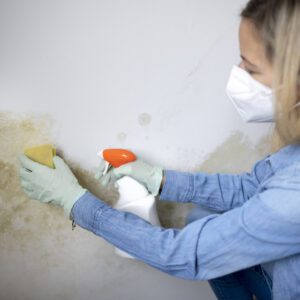
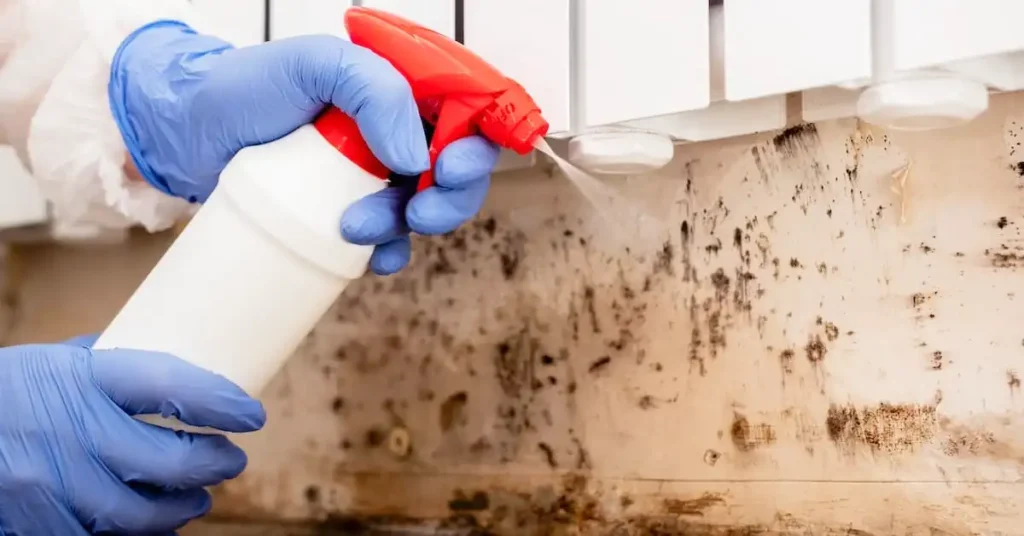
To remove mold from walls safely and effectively, you should wear gloves, a mask, and goggles, then use a mold-killing solution to clean the surface.
Here’s how to clean mold off walls:
- Wear protective gear – gloves, N95 mask, and goggles.
- Ventilate the space – open windows and use a fan if possible.
- Scrub the moldy area – use a mix of detergent and water or a commercial mold remover.
- Rinse and dry thoroughly – mold grows back quickly if moisture lingers.
- Dispose of contaminated materials – including sponges and rags.
For drywall, avoid over-saturating with water—this can worsen the problem. If the drywall is crumbling or too damaged, it’s best to replace that section entirely.
Learn more about our mold remediation process to see when it’s time for professional help.
Can You Remove Mold from Wood?
Yes, but it depends on how deep the mold has penetrated.
To clean mold off wood:
- Use a soft brush and a detergent or vinegar solution.
- Lightly sand if the mold has penetrated the surface.
- Dry the area completely to prevent regrowth.
Be cautious with antique or structural wood—if you’re unsure, consult a professional mold inspector. The EPA recommends avoiding harsh chemicals like bleach on porous materials like unfinished wood, as it won’t reach the mold roots.
How Do You Get Rid of Mold in the Bathroom?
Bathrooms are mold magnets because of constant moisture.
To remove mold from bathrooms:
- Use a mixture of 1 part bleach to 10 parts water.
- Scrub mold off tiles, grout, and caulking.
- Replace moldy caulk if cleaning doesn’t work.
For mold on a bathroom ceiling, use a mold-specific cleaner and apply it carefully with a sponge or spray bottle. Avoid repainting until the area is fully dry and mold-free.
Tip: Use an exhaust fan after every shower to lower humidity. The American Lung Association notes that long-term mold exposure can worsen asthma and other respiratory conditions.
When Should You Call a Mold Removal Professional?
Give us a call if and when:
- The mold covers more than 10 square feet.
- It keeps coming back after cleaning.
- You have mold in HVAC systems or behind walls.
- You or your family experience health symptoms like allergies or asthma.
Mold remediation specialists, like our team at Rapid Response in Columbus and Dayton, have the tools to identify hidden mold and remove it safely and completely.
Explore our local mold services for help tailored to Ohio homes.
What Should Ohio Homeowners Watch Out For?
Ohio’s hot, humid summers and cold, damp winters make mold a year-round risk.
Watch for these seasonal mold triggers:
- Summer: Poor A/C drainage and high humidity in basements.
- Winter: Condensation on cold walls and windows.
Homes in Columbus and Dayton with older plumbing or poor insulation are especially vulnerable. Consider using mold testing kits after heavy rain or snowmelt.
Need seasonal mold checks? Learn about our professional inspections to catch issues early.
FAQ
Q: Is mold covered by homeowners insurance?
A: It depends. Some policies cover mold if it’s caused by a “covered peril” like a burst pipe. Always check your policy and document the damage for claims.
Q: How much does mold remediation cost?
A: Remediation costs vary based on size and location. In Ohio, expect $500–$6,000. Larger jobs involving drywall or HVAC systems will cost more.
Q: Are DIY mold testing kits accurate?
A: They’re useful for spotting surface mold but less reliable for hidden mold. A professional mold inspector can provide lab-grade results and advice.
Q: What’s the difference between mold and mildew?
A: Mildew is a surface fungus that’s usually gray or white. Mold is darker, thicker, and penetrates deeper—often requiring removal or replacement.
Q: Can I just paint over mold?
A: No. Painting over mold traps moisture and can make it worse. Always clean and dry the area thoroughly first.
Call Rapid Response for Trusted Mold Removal in Ohio
If you’re unsure whether your mold problem is DIY-friendly or needs expert care, let’s talk. Our team is here to help!!! Rapid Response proudly serves Columbus, Dayton, and surrounding Ohio areas with honest assessments and fast service.
Don’t wait—mold grows fast. Request a quote or inspection today.